Mission Impossible — Shot-down US Jet F-15E crew rescued
It could have been a public-relations disaster and a humiliation for Donald Trump at the worst possible moment. Instead, U.S. forces are being described as having pulled off one of the most elaborate combat search-and-rescue sequences in recent memory—two airmen down in southern Iran, separated on the ground, hunted for bounty, and brought out across roughly two days of high exposure.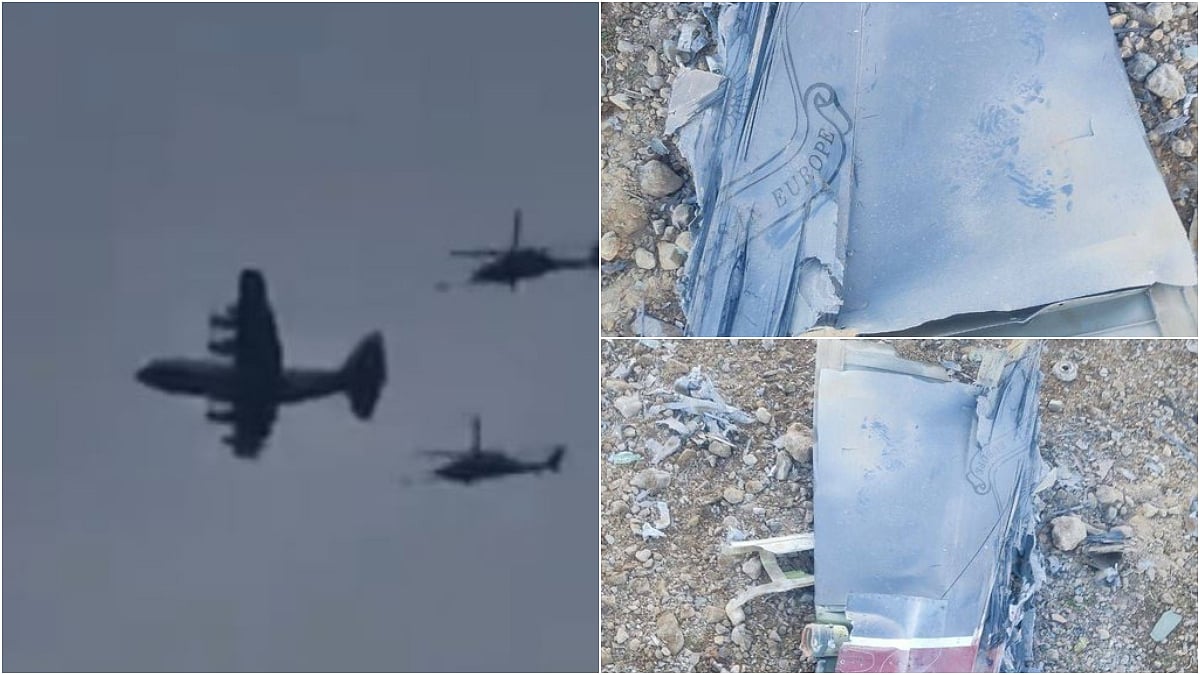
When rescue costs more than it saves
Everyone remembers Black Hawk Down—the film and the 1993 Battle of Mogadishu behind it. Two UH-60 Black Hawks went down in Somalia; roughly ninety U.S. elite troops rushed in; the operation turned into an eighteen-hour urban fight. Eighteen Americans died; many more were wounded. The lesson stuck: going deep into enemy territory to save a few people can cost more lives than you recover if the plan frays.
That is why “no one left behind” is both a promise and a gamble.
April 3: F-15E down, crew separated
By the narrative that has reached commentators, an F-15E was lost to a surface-to-air missile on a strike mission over southern Iran—described as the first U.S. aircraft shot down by enemy fire on that kind of sortie after weeks of air operations. Some reconstructions specify an SA-6-class engagement and place the jet as fourth of four in a strike package—details worth checking against official post-strike reporting.
Pilot and weapons system officer ejected; beacons went to CENTCOM. They landed in rough, mountainous terrain and were separated.
IRGC search parties fanned out. Iranian state media reportedly offered a bounty on the order of ~$64,000 for capture or intelligence—enough to mobilize locals in an area where one account places a city of well over 100,000 and several villages in the search radius. The downed airmen were high-value prey. Journalist Jack Murphy was among those who surfaced early word that the WSO had been recovered alive—treated as a signal in open-source circles, not a government release.
Phase one: pilot out — low, loud, and contested
The pilot was found first. Open-source descriptions (with cellphone video from the ground) describe an HC-130 variant flying extremely low—partly to stay under or complicate long-range radar, partly as a command-and-control and tanker node for HH-60 combat-rescue helicopters. A-10 aircraft are said to have flown close air support. The package took fire; crews used flares; helicopters took small arms on the way out. Aircraft were damaged, people hurt, but the pilot was reportedly out.
Some follow-on analysis (Carroll / Murphy) stresses that the second airman’s extraction was not another HH-60 ride out—it escalated into a different kind of package (below).
Phase two: the WSO — deception, patience, and a night option
The second airman was harder. Multiple commentators describe him as a colonel (O-6) weapons officer—senior enough that his capture would have been a propaganda prize. Airspace was treated as too hot for the same slow, daylight profile that had worked for the first pickup.
Accounts attributed to U.S. officials describe him hiding in a mountain crevice, injured (including a sprained or broken ankle from ejection), moving under SERE for something like a day and a half, and climbing—journalist Toby Harnden (per the Carroll stream) posted that the airman evaded up a ~7,000 ft ridge line to improve survival odds. He used beacon and comms sparingly so Iran could not triangulate him prematurely.
The Carroll/Murphy discussion adds texture to the CIA thread: not only generic “misinformation,” but a deception that U.S. forces had already found the WSO and were attempting a ground exfil in southern Iran—meant to pull regime attention the wrong way while “unique capabilities” (including local networks) narrowed the real location. Southern Lur-linked areas are described in that stream as not pro-regime; night traffic jams on roads may have slowed IRGC responders—interesting if true, impossible to confirm from a couch.
Unconventional assisted recovery—partisan-style chains behind lines—shows up in the same commentary as historical analogy (WWII escape lines). Treat every layer as alleged until official history catches up.
“Hundreds” of troops, JSOC, and a FARP inside Iran
The second half of the story escalates well beyond a single helo sortie. [Carroll and Murphy] sketch a JSOC-heavy package: SEAL Team 6 with Air Force Special Tactics, four MH-6 Little Birds (160th SOAR–style night work), HC-130 / MC-130 support, and—when the ground problem got worse—a Delta quick-reaction element. That stream explicitly separates the first Air Force CSAR (PJs, HH-60) from this second Little Bird–centric push—HH-60 was not, in their telling, the exfil platform for the WSO.
They describe a FARP on an improvised strip (crop/ag runway in the Shiraz / “Shereza” map area on their show), ~200 km in, where C-130s landed and Little Birds launched toward Dasht-area terrain. Preparatory fires—they cite B-1 loads of precision weapons plus cut roads and comms towers to choke Iranian ingress—would belong to a much larger air plan; one throwaway number in the stream is ~76 aircraft tied to the overall episode (including losses and enablers).
The exit went messy: C-130s allegedly sank into soft ground; timeline stretched toward dawn; a smaller CASA C-295 (427th SOS, Pope AFB) reportedly flew in because it could operate from that strip where heavier airlifters could not. Two stranded C-130s and two Little Birds left behind were destroyed in place (some accounts say satchel charges, others B-1 strikes on abandoned hulls—fog of war). Al Jaber in Kuwait appears in the same stream as a launch hub; A-10 “Sandy” support and Reaper losses get mentioned as part of the wider contested air picture.
If even part of that is accurate, it is a mini-operation nested inside a wider war—not a movie ending, and a long way from 1980 Desert One, which failed in the sand.
Why it mattered politically
For the White House, a bungled or televised failure—pilots on parade on Iranian TV—would have fed overreach and humiliation narratives in the middle of a hot air campaign. A completed extraction feeds competence and resolve, whatever one thinks of the war itself. Mission: Impossible is fiction; this episode, as relayed, was not supposed to look easy—and did not.
References
Synthesis and commentary in this post draw on open analysis, including Chris Cappy’s breakdown on YouTube, which cites U.S. officials and press such as the New York Times. That channel is secondary—not a primary document.
Ward Carroll live stream with Jack Murphy (YouTube)—military-aviation host plus SOF journalist; parallel reconstruction now folded into the sections above. Same caveat: not a primary document.
Free Press Journal — F-15E rescue / second airman search — reference image page and CNN/WSJ/IRIB-sourced summary (Apr 2026); agency auto-generated disclaimer on article.
Treat every tactical detail as reporting, not confirmed fact, until Department of Defense releases and major wires align. Confirm aircraft types, unit names, locations, and timelines the same way.
#Iran #USA #CSAR #F15 #CENTCOM #IRGC #BlackHawkDown #Trump #Military #Geopolitics #RBL


Comments
Post a Comment