Ford's CEO says Chinese cars would devastate US manufacturing — but Ford was the first to outsource to China in the 80s
Ford's CEO says Chinese cars would devastate US manufacturing — but Ford was the first to outsource to China in the 80s
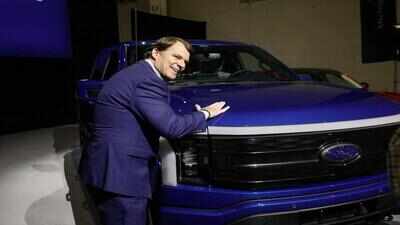
Ford CEO Jim Farley said that as he warned that letting Chinese carmakers sell freely in the United States would be “devastating” to American automakers — a defense of domestic manufacturing and market walls in plain English. He ties it to scale (China’s huge capacity), jobs, and lately data/privacy angles on connected cars.
The same public voice sits oddly next to history: Ford was early among U.S. names pushing sourcing and production into China as joint ventures and supply chains matured — while Michigan went through round after round of plant cuts and Detroit-area layoffs in the 2000s (and beyond) as North American footprint shrank or shifted. That is not a moral gotcha on one executive; it is how global auto capital behaved for decades. It does sharpen the irony when the CEO today warns of foreign cars as an existential threat to home builders.
Below is a rough chronology I put together of U.S. automakers leaning on China for parts, JVs, and volume — Ford rows carry the thread I care about here; GM appears where it sets scale next door. Volumes are order-of-magnitude from press and industry chatter, not audited 10-K lines; I will tighten citations when I turn this into a longer piece.
|
Year |
Automaker |
What was manufactured |
Estimated volume |
Cost scale |
Notes |
|
1983 |
AMC/Jeep |
Jeep CJ‑7, Cherokee |
~10k–20k units/year (early JV) |
Medium |
Early U.S. JV footprint (not Ford). |
|
1984 |
Ford |
Engine parts, stampings |
Parts only (no unit count published) |
Low |
Often cited as among Ford’s first China manufacturing steps. |
|
1992 |
GM |
Engines, transmissions |
Modules only |
Medium |
|
|
1997 |
GM |
Buick Regal, Century |
China sales later exceed 1M/year (GM total) |
High |
— |
|
2001 |
Ford |
Fiesta components |
Parts/modules |
Medium |
— |
|
2003 |
Ford |
Fiesta, Mondeo |
JV capacity ~200k/year |
Medium |
— |
|
2005 |
GM |
Chevrolet Sail, Buick Excelle |
GM China sales >1M/year |
High |
— |
|
2006–2010 |
Ford |
Engines, transmissions |
Powertrain modules |
Medium |
— |
|
2011 |
Ford |
Focus, Kuga, EcoSport |
Ford China sales ~900k/year |
High |
Peak local volume era before some retrenchment. |
|
2012–2015 |
GM |
Cadillac XTS, ATS‑L |
GM China sales ~3M/year |
High |
— |
|
2016 |
Ford |
Edge, Taurus |
Ford China capacity ~200k/year (Harbin plant) |
Medium |
— |
|
2017 |
Ford |
EV components |
Modules only |
Medium |
— |
|
2018 |
Ford |
Focus (exported to U.S.) |
Low volume (Focus discontinued in U.S.) |
Medium |
Re-import chapter — U.S. buyer, China build. |
|
2019–2020 |
GM, Ford |
Batteries, EV motors |
China = world’s largest EV component producer |
High |
Supply chain depth, not only badges. |
GM, too — not just Ford
|
Year |
What GM Manufactured in China |
Estimated Volume |
Cost Scale |
Notes |
|
1985–1991 |
Small components, wiring harnesses |
Parts only |
Low |
Early sourcing before major JV formation |
|
1992 |
Engines, transmissions (SAIC–GM groundwork) |
Modules only |
Medium |
GM begins deep technical cooperation with SAIC |
|
1997 |
Buick Regal, Buick Century |
~100k–200k units/year |
High |
SAIC–GM becomes China’s top JV almost immediately |
|
1999–2003 |
Buick Excelle, Sail (Chevrolet) |
GM China sales cross 500k/year |
High |
GM becomes dominant foreign automaker |
|
2004–2008 |
Full vehicle lineup: Buick, Chevrolet, Wuling |
GM China sales exceed 1M/year |
High |
China becomes GM’s largest market outside U.S. |
|
2009–2012 |
Wuling microvans, Baojun models |
1.2M–1.5M units/year |
High |
SAIC‑GM‑Wuling becomes world’s largest microvan producer |
|
2013–2015 |
Cadillac XTS, ATS‑L (localized luxury) |
~200k/year luxury segment |
High |
GM localizes Cadillac to compete with Audi/BMW |
|
2016 |
Chevrolet Malibu XL, Buick LaCrosse |
GM China sales ~3M/year |
High |
Peak GM China volume |
|
2017 |
EV components (motors, controllers) |
Modules only |
Medium |
GM shifts EV supply chain to China |
|
2018 |
Buick Envision exported to U.S. |
~40k–50k units/year |
Medium |
First GM China‑built vehicle sold in U.S. |
|
2019–2020 |
Batteries, EV motors (Ultium supply chain) |
China = world’s largest EV component source |
High |
GM integrates Chinese suppliers into EV architecture |
What I take from it
Farley is doing his job for Ford shareholders in 2026: keep tariffs and narrative pressure on a rival that could flood price-sensitive segments. More broadly, the tables are a reminder that “American” automakers have long chased efficiency and margin across global supply chains — not only Ford, and not only “today.” Policy fights of the 2020s sit on top of choices from the 1980s onward.
China didn’t “show up” today. American companies chasing profits started building and localizing in China roughly two decades ago, and now they complain that China is taking over. That is how capitalism works: the only way through for U.S. companies is to innovate faster and keep building better products.
References (starting points)
- Business Insider — Farley’s “devastating” quote on Chinese automakers entering the U.S.
- Yahoo Finance — same story line
- For JV history and volumes, I plan to lean on Ford / GM annual reports, SAIC / Changan-side releases, and Caixin / Automotive News China when I fill out the table for a longer version.
#Ford #China #JimFarley #AutoIndustry #EV #Trade #TechMuffins #RBL #Manufacturing


Comments
Post a Comment